Showing posts with label weight loss. Show all posts

Wednesday, March 13, 2019

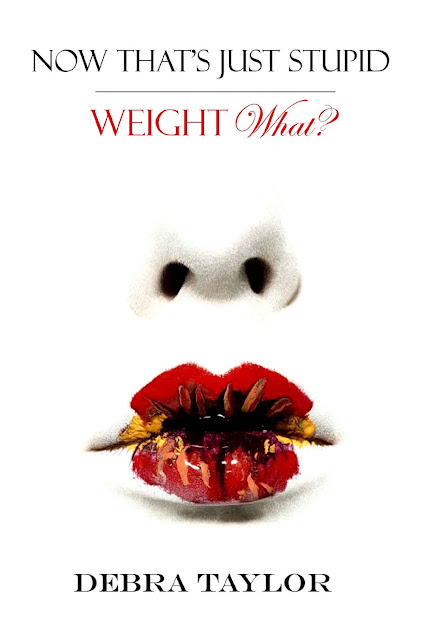
"Now That’s Just Stupid: Weight, What?" by Debra Taylor


EXCERPT and GIVEAWAY
Now That’s Just Stupid: Weight, What?
by Debra Taylor

Now That’s Just Stupid: Weight, What?  by Debra Taylor
  
Now That’s Just Stupid: Weight, What? by Debra Taylor is currently on tour with Silver Dagger Book ToursThe tour stops here today for an excerpt and a giveaway. Please be sure to visit the other tour stops as well.


Description
The F-Word: A three letter word that carries the greatest impact to the deepest void inside the soul … Fat, there I said it. Just the word alone makes every hurt, pain, failure, or haunting memory rise to the surface, and food is the only thing that will quiet the storm. You don’t have a problem with food! You have problems, issues, behaviors, and your go-to food. There is a big difference!
Weight, What? is the third release in the Now That’s Just Stupid, Inc. book series. It’s a journey through real weight loss using regular, everyday foods, only this time you will solve the issues and keep the food. No one should tell you what to eat, what not to eat, or how much to eat. YOU know how to do that! What you don’t know is how to solve the reasons why you overeat. Healthy foods and exercise didn’t make you fat, and they won’t make you thin UNTIL you face the emotional issues underneath the weight.
This book will show you how to use your food to guide you toward your C.O.R.E. issues and take the steps to solve them.

Book Video


Excerpt
Obesity
o·be·si·ty| /ōˈbēsədē/ noun
1.   a condition characterized by the excessive accumulation and storage of fat in the body
  1. a chronic, relapsing, multifactorial, neurobehavioral disease
My definitions:
1.   a sole sentence that enforces one to cater to societal beliefs that you are lazy with no willpower or motivation to achieve their level of attractiveness or health standards
  1. a public visual aid of every heartbreak, pain and broken piece of life that you were given or forced to consume
____________________
You are not your weight. Just the sound of the word fat brings an internal embarrassment of shame that pulls anger or humiliation to the surface instantaneously. Every time we hear that word, we often lash out at anything in our pathway or bury the enormous burden of self-loathing with more food. Either way, the cycle continues to the point that our familiar realization is a variety of honest assessments such as I don’t know what’s wrong. I can’t stop. No matter how many diets I have done, it’s inevitable that I will put it all the weight back on and then some.
My response is always: Are you done now? You see, I’ve been in your shoes too many times, and I will not let you stay defeated unless you choose to remain overweight. It is a choice, not a destiny. Weight,WHAT? is going to unfold all your baggage and solve it this time. You will experience every emotion imaginable before you reach your goal weight. It will be hard. You will want to run or worse yet, quit again. But if you stay, you will know who and what caused your obesity, {and it wasn’t food}, and the practical steps to break the addiction, of using food, to cope with a life you were not born to live. This is called “doing the work” and I, for one, know you are worth it!
[Want more? Click below to read a longer excerpt.]


Praise for the Book
“I’ve never actually set out to read a book about weight. I had a hard time at first relating to the book and I almost put it down. I’m glad I didn’t and have realized some things that I thought I didn’t allow to affect my life that is. I also know there are more books by Debra Taylor that will also be helpful and I’m looking forward to reading them. Her knowledge helps put things into perspective and gives you resources to help.” ~ Raychel, United Indie Book Blog

About the Author
Debra Taylor
Author Debra Taylor has battled obesity since childhood topping out at almost 400 pounds before learning to manage her addiction to food. She now holds a Masters of Science with an emphasis in Applied Behavioral Analysis and a Ph.D. In Psychology, with an emphasis in addiction. Her specialty is working with clients who struggle with behavioral or emotional eating before, during and after their weight loss. She has traveled nationally and internationally as a motivational speaker and was Director over several hospital surgical and non-surgical weight loss programs. While working with thousands of obese individuals she designed the meaning behind food groups that explain and solve emotional eating while teaching people to lose weight eating regular, everyday foods.

Giveaway
Enter the tour-wide giveaway for a chance to win a $25 Amazon gift card.

Links
Amazon (Kindle Unlimited)

Books featured in this post:


Tuesday, September 17, 2013

"The Diet Dropout's Guide to Natural Weight Loss: Find Your Easiest Path to Naturally Thin" by Stan Spencer, PhD


The Diet Dropout's Guide to Natural Weight Loss: Find Your Easiest Path to Naturally Thin 
by Stan Spencer, PhD 


Description 
This book isn't about the latest celebrity diet, wonder food, or miracle supplement. It's about creating a personalized weight loss plan - your own easiest path to naturally thin. While you can lose weight with almost any diet, keeping the weight off is much more difficult, requiring permanent changes in eating and exercise habits. This book provides a science-based approach for making those changes in a way that works best for you, without wasting time, money, or effort.
Dr. Spencer explains why we gain weight and why the fat lost by dieting almost always comes back. He then presents an array of practical weight loss tools for controlling emotional eating, calming cravings, boosting metabolism, and improving nutrition and exercise. In the final chapter he has you create a natural weight loss plan based on your unique set of needs, abilities, and preferences. Simple recipes are provided for weight loss foods that reduce cravings and prolong satisfaction.
What this book offers is a solid approach to weight loss - self-directed, gradual, and lasting - in contrast to the quick but fleeting weight loss offered by most one-size-fits-all diet plans.

Excerpt 
If this were the early 1960s instead of the 2010s, you might not need a weight loss book. Most people were thin then.
Not now. Even with all the dieting we do, more than two thirds of US adults are now overweight, and the rate of obesity has almost tripled since 1960.
The extra weight isn’t natural, nor is it healthy. It not only affects our looks and physical abilities, it increases our risks of developing diabetes, heart disease, stroke, high blood pressure, gallbladder disease, osteoarthritis, sleep apnea, high cholesterol, complications of pregnancy, menstrual irregularities, and cancers of the uterus, breast, colon, and kidney.
So what is behind this weight gain epidemic?
A Less-Active Lifestyle
Our bodies are designed for manual labor and long-distance walking. Many of us, however, enjoy door-to-door motorized transportation to and from a desk job followed by hours of television or other passive entertainment. Such a lifestyle not only burns few calories but can also encourage us to eat more than we would if we were busy with physical activities.
The Fattening Food Environment
Before processed foods became the norm, our ancestors filled their dinner plates with minimally processed vegetables, fruits, and whole grains. Meats were unprocessed and lean. These natural foods, combined with an active lifestyle, promoted a slim, healthy body.
In contrast to the healthy foods enjoyed by our ancestors, the foods on our grocery store shelves today are often highly processed and have added fat and sugar. These processed foods are packed with calories and are so convenient and tempting that it’s easy to eat too much of them. As a result, the average adult today eats more calories than in past decades, with most of the extra calories coming from carbohydrate-rich foods such as sweets, soft drinks, potato products, pizza, bread, pasta, and white rice.
There are ten important aspects of our food environment that encourage us to eat too much.
Foods that Don’t Satisfy
Food processing produces calorie-heavy, low-nutrient, low-fiber foods that digest quickly. These foods leave us with loads of calories, soon-empty stomachs, and cravings for more.
Highly Palatable Foods
Highly palatable is a term used by scientists for foods that taste so good that we are tempted to eat them even when our stomachs are full. Most of these are processed foods high in fat, sugar, or refined flour. Such foods have become more abundant and affordable in recent decades, resulting in greater temptations to overeat. We often eat these foods for comfort or pleasure, not because we are hungry.
Highly palatable foods affect the parts of the brain that are responsible for drug addiction and cravings. The authors of a scientific study of the brain's response to highly palatable foods concluded that “overconsumption of palatable food triggers addiction-like responses in brain reward circuits and drives the development of compulsive eating.” In other words, junk food can be addictive.
Calorie-Heavy Foods
While the vegetables, fresh fruits, and whole grains our ancestors ate were high in nutrients and low in calories, the processed foods that fill our grocery store shelves are just the opposite — high in calories and low in nutrients. The result is that a typical meal of modern processed foods has more calories than we need and often too few nutrients. Calorie-heavy foods are believed to be a major factor in the weight gain epidemic.
Cheap, Convenient Food
There is inexpensive, ready-to-eat food almost everywhere we go. We have candy jars at work and cookie jars at home. We stock our refrigerators with soft drinks and our pantries with packaged snacks. Just seeing junk food can make us hungry, and food within easy reach is harder to resist than food that requires a little more effort to obtain. Eating too much has never been easier.
Large Portions
In the US, portion sizes of many foods have increased two- to five-fold since the 1970s.11 We tend to keep eating until the portion in front of us is gone, no matter what its size. Similarly, we tend to eat more when eating a snack food directly out of a large package (such as a bag of potato chips) than when served individual portions.
Passive Entertainment
Watching television or movies burns very few calories. It also encourages needless eating. If we eat during such entertainment, our distraction with the storyline can cause us to continue eating past the point at which we would normally be satisfied.
Convenient Substitutes for Water
Sports drinks, sugary soft drinks, fruit juices, and alcoholic drinks are readily available in our homes and elsewhere. These drinks quickly add calories without lasting satisfaction. Their consumption is believed to be a major factor in the weight gain epidemic.
Misleading Labels and Advertising
A picture of a slender athlete on a package of fresh fruit might make sense. The same picture on an “energy bar” consisting mostly of corn syrup and puffed rice does not. Advertisements often inaccurately depict the health benefits of the foods they are promoting.
Unhealthy Snack Foods
Common snack foods tend to be higher in calories and lower in nutrients than the kinds of foods usually eaten with meals. They are quick to add calories but slow to satisfy.
Restaurants
We eat out more now than in decades past. Restaurant food tends to be higher in calories and served in larger portions than food cooked at home. As a result, one restaurant meal might have enough calories for an entire day.
The Solution
Think of excess fat as a collection of bad habits. Lose the fat-promoting habits, and you will lose the excess fat. Each time you give up one of these bad habits (all other things being equal), you will lose fat until your body naturally settles at a lower weight. At that point you will need to give up another bad habit to lose more weight and keep it off.
Permanent weight loss requires permanent lifestyle changes. The information in this book will help you replace bad habits with good ones and make the lifestyle changes required for lasting weight loss. You will learn how small adjustments in your eating and exercise habits can result in a big difference in body fat over time, why many of the things you hear about gaining or losing weight are false, and why popular diets rarely produce permanent weight loss. You will also learn how to change your personal environment so it’s no longer fattening, boost your metabolism without drugs or supplements, give your body the exercise it needs without wasting time, eat fewer calories without counting them or going hungry, and beat temptation with the willpower you already have.
Often, the hardest part of forming new habits is just getting started. Watch for the QuickStart Tips as you read through the book. They will prompt you to pause and take solid steps down the path to your naturally thin potential.

Review
Being married to an amateur health guru who writes her own health blog, I have read countless articles, books, magazines and watched innumerable documentaries on the topic of health. In that span of time, I have learned about diets (and why they don't work), sleep, exercise and their effects on overall health. But it was not until I read this book that I found so many high-level concepts reduced to a simple language with specific tactics that make taking up a healthy lifestyle so practical, without being gimmicky in the least.
The beauty of this piece is that it deals with weight from every angle - cognitive, emotional and physical. So many works on the market deal with just one at a time, but Dr. Spencer's work provides a blueprint with tactics to manage all three at once to make simple yet effective and lasting change in the reader's life. It also comes in a book that can be read in an afternoon and the reader can start down their new path today.
The concepts Spencer addresses in the book need not only apply to those looking to manage their weight - they provide a foundation for anyone wanting to live a healthy lifestyle. I would recommend this book to anyone who has ever tried a diet and not gotten the results they were looking for, as well as anyone who is serious about leading a healthy life.

About the Author

Stan Spencer, PhD, was born in Mexico and grew up in Utah, USA. He is a biological consultant and former research scientist. Stan has conducted laboratory studies in biochemistry at Brigham Young University, in botany and evolution at Claremont Graduate University, and in genetics at the Smithsonian Institution. Stan lives in southern California his wife, Amy, and a varying number of their seven children. He blogs on natural weight loss techniques at Fat Loss Science.
Links

Thursday, January 17, 2013

The Diet Dropout's Guide to Natural Weight Loss: Find Your Easiest Path to Naturally Thin by Stan Spencer


NEW RELEASE and GIVEAWAY

The Diet Dropout's Guide to Natural Weight Loss: Find Your Easiest Path to Naturally Thin
by Stan Spencer, PhD


You're in for a treat. You have the chance of winning a paperback copy of this book. Enter the GIVEAWAY below for your chance to win. Thanks to Dr Stan Spencer for donating this awesome prize.


Description
This book isn't about the latest celebrity diet, wonder food, or miracle supplement. It's about creating a personalized weight loss plan - your own easiest path to naturally thin. While you can lose weight with almost any diet, keeping the weight off is much more difficult, requiring permanent changes in eating and exercise habits. This book provides a science-based approach for making those changes in a way that works best for you, without wasting time, money, or effort.
Dr. Spencer explains why we gain weight and why the fat lost by dieting almost always comes back. He then presents an array of practical weight loss tools for controlling emotional eating, calming cravings, boosting metabolism, and improving nutrition and exercise. In the final chapter he has you create a natural weight loss plan based on your unique set of needs, abilities, and preferences. Simple recipes are provided for weight loss foods that reduce cravings and prolong satisfaction.
What this book offers is a solid approach to weight loss - self-directed, gradual, and lasting - in contrast to the quick but fleeting weight loss offered by most one-size-fits-all diet plans.

Excerpt
If this were the early 1960s instead of the 2010s, you might not need a weight loss book. Most people were thin then.
Not now. Even with all the dieting we do, more than two thirds of US adults are now overweight, and the rate of obesity has almost tripled since 1960.
The extra weight isn’t natural, nor is it healthy. It not only affects our looks and physical abilities, it increases our risks of developing diabetes, heart disease, stroke, high blood pressure, gallbladder disease, osteoarthritis, sleep apnea, high cholesterol, complications of pregnancy, menstrual irregularities, and cancers of the uterus, breast, colon, and kidney.
So what is behind this weight gain epidemic?
A Less-Active Lifestyle
Our bodies are designed for manual labor and long-distance walking. Many of us, however, enjoy door-to-door motorized transportation to and from a desk job followed by hours of television or other passive entertainment. Such a lifestyle not only burns few calories but can also encourage us to eat more than we would if we were busy with physical activities.
The Fattening Food Environment
Before processed foods became the norm, our ancestors filled their dinner plates with minimally processed vegetables, fruits, and whole grains. Meats were unprocessed and lean. These natural foods, combined with an active lifestyle, promoted a slim, healthy body.
In contrast to the healthy foods enjoyed by our ancestors, the foods on our grocery store shelves today are often highly processed and have added fat and sugar. These processed foods are packed with calories and are so convenient and tempting that it’s easy to eat too much of them. As a result, the average adult today eats more calories than in past decades, with most of the extra calories coming from carbohydrate-rich foods such as sweets, soft drinks, potato products, pizza, bread, pasta, and white rice.
There are ten important aspects of our food environment that encourage us to eat too much.
Foods that Don’t Satisfy
Food processing produces calorie-heavy, low-nutrient, low-fiber foods that digest quickly. These foods leave us with loads of calories, soon-empty stomachs, and cravings for more.
Highly Palatable Foods
Highly palatable is a term used by scientists for foods that taste so good that we are tempted to eat them even when our stomachs are full. Most of these are processed foods high in fat, sugar, or refined flour. Such foods have become more abundant and affordable in recent decades, resulting in greater temptations to overeat. We often eat these foods for comfort or pleasure, not because we are hungry.
Highly palatable foods affect the parts of the brain that are responsible for drug addiction and cravings. The authors of a scientific study of the brain's response to highly palatable foods concluded that “overconsumption of palatable food triggers addiction-like responses in brain reward circuits and drives the development of compulsive eating.” In other words, junk food can be addictive.
Calorie-Heavy Foods
While the vegetables, fresh fruits, and whole grains our ancestors ate were high in nutrients and low in calories, the processed foods that fill our grocery store shelves are just the opposite — high in calories and low in nutrients. The result is that a typical meal of modern processed foods has more calories than we need and often too few nutrients. Calorie-heavy foods are believed to be a major factor in the weight gain epidemic.
Cheap, Convenient Food
There is inexpensive, ready-to-eat food almost everywhere we go. We have candy jars at work and cookie jars at home. We stock our refrigerators with soft drinks and our pantries with packaged snacks. Just seeing junk food can make us hungry, and food within easy reach is harder to resist than food that requires a little more effort to obtain. Eating too much has never been easier.
Large Portions
In the US, portion sizes of many foods have increased two- to five-fold since the 1970s.11 We tend to keep eating until the portion in front of us is gone, no matter what its size. Similarly, we tend to eat more when eating a snack food directly out of a large package (such as a bag of potato chips) than when served individual portions.
Passive Entertainment
Watching television or movies burns very few calories. It also encourages needless eating. If we eat during such entertainment, our distraction with the storyline can cause us to continue eating past the point at which we would normally be satisfied.
Convenient Substitutes for Water
Sports drinks, sugary soft drinks, fruit juices, and alcoholic drinks are readily available in our homes and elsewhere. These drinks quickly add calories without lasting satisfaction. Their consumption is believed to be a major factor in the weight gain epidemic.
Misleading Labels and Advertising
A picture of a slender athlete on a package of fresh fruit might make sense. The same picture on an “energy bar” consisting mostly of corn syrup and puffed rice does not. Advertisements often inaccurately depict the health benefits of the foods they are promoting.
Unhealthy Snack Foods
Common snack foods tend to be higher in calories and lower in nutrients than the kinds of foods usually eaten with meals. They are quick to add calories but slow to satisfy.
Restaurants
We eat out more now than in decades past. Restaurant food tends to be higher in calories and served in larger portions than food cooked at home. As a result, one restaurant meal might have enough calories for an entire day.
The Solution
Think of excess fat as a collection of bad habits. Lose the fat-promoting habits, and you will lose the excess fat. Each time you give up one of these bad habits (all other things being equal), you will lose fat until your body naturally settles at a lower weight. At that point you will need to give up another bad habit to lose more weight and keep it off.
Permanent weight loss requires permanent lifestyle changes. The information in this book will help you replace bad habits with good ones and make the lifestyle changes required for lasting weight loss. You will learn how small adjustments in your eating and exercise habits can result in a big difference in body fat over time, why many of the things you hear about gaining or losing weight are false, and why popular diets rarely produce permanent weight loss. You will also learn how to change your personal environment so it’s no longer fattening, boost your metabolism without drugs or supplements, give your body the exercise it needs without wasting time, eat fewer calories without counting them or going hungry, and beat temptation with the willpower you already have.
Often, the hardest part of forming new habits is just getting started. Watch for the QuickStart Tips as you read through the book. They will prompt you to pause and take solid steps down the path to your naturally thin potential.

Review
Being married to an amateur health guru who writes her own health blog, I have read countless articles, books, magazines and watched innumerable documentaries on the topic of health. In that span of time, I have learned about diets (and why they don't work), sleep, exercise and their effects on overall health. But it was not until I read this book that I found so many high-level concepts reduced to a simple language with specific tactics that make taking up a healthy lifestyle so practical, without being gimmicky in the least.
The beauty of this piece is that it deals with weight from every angle - cognitive, emotional and physical. So many works on the market deal with just one at a time, but Dr. Spencer's work provides a blueprint with tactics to manage all three at once to make simple yet effective and lasting change in the reader's life. It also comes in a book that can be read in an afternoon and the reader can start down their new path today.
The concepts Spencer addresses in the book need not only apply to those looking to manage their weight - they provide a foundation for anyone wanting to live a healthy lifestyle. I would recommend this book to anyone who has ever tried a diet and not gotten the results they were looking for, as well as anyone who is serious about leading a healthy life.

About the Author

Stan Spencer, PhD, was born in Mexico and grew up in Utah, USA. He is a biological consultant and former research scientist. Stan has conducted laboratory studies in biochemistry at Brigham Young University, in botany and evolution at Claremont Graduate University, and in genetics at the Smithsonian Institution. Stan lives in southern California his wife, Amy, and a varying number of their seven children. He blogs on natural weight loss techniques at Fat Loss Science.
Giveaway

a Rafflecopter giveaway


Links