Showing posts with label nutrition. Show all posts

Wednesday, December 18, 2019

"Fill Your Mind Before You Fill Your Plate" by Faisal Alshawa


EXCERPT and GIVEAWAY
Fill Your Mind Before You Fill Your Plate
by Faisal Alshawa

Fill Your Mind Before You Fill Your Plate by Faisal Alshawa

Fill Your Mind Before You Fill Your Plate by Faisal Alshawa is currently on tour with Reading Addiction Book Tours. The tour stops here today for an excerpt and a giveaway. Please be sure to visit the other tour stops as well.


Description
Fill Your Mind Before You Fill Your Plate offers practical advice so you can create and maintain a healthy lifestyle, amidst the fast-paced and stressful world we live in. If you are confused about where to start in your health journey or looking for ways to live a healthy lifestyle consistently, then this book is for you!


Excerpt
At a Glance
Faisal Alshawa is a nutritional expert consulting to athletes and busy working professionals worldwide. His clients are typically successful people who recognise the need to make their health and living a healthier lifestyle a priority.
His first book, Fill Your Mind Before You Fill Your Plate is both a primer and impeccable gear change as well as a practical reference guide to creating and managing a healthy lifestyle … starting with mindset.
Faisal Alshawa transformed his own health using the exact Five Pillars For Living A Healthier Lifestyle method outlined in this book, starting with a detailed exploration of the mindset required to making living a healthier lifestyle a life-long habit.
What makes this a highly readable reference is Alshawa candidly shares his own journey including the setbacks and struggles.
The Five Pillars For Living A Healthier Lifestyle are:
   Mindset
   Belief
   Mindfulness
   Sacrifice
   Habits
What makes Fill Your Mind Before You Fill Your Plate such an accessible read for anyone contemplating transforming their health, or for those looking for a mental edge to maintain a healthy lifestyle, is certainly the qualified insights, but also the open and conversational narrative.
Alshawa carefully describes his first exposure to a fitness culture as a Kuwaiti exchange student studying in the US. He then explains how he created a mental regime to stay on track.
That said, Alshawa is candid about the roadblocks, obstacles and setbacks he encountered and the ones you will encounter … and should expect.
The chapters are clear and concise and this will drive your understanding, insights, application and momentum towards a healthier lifestyle.
[Want more? Click below to read a longer excerpt.]


Praise for the Book
“I honestly found this book very helpful in framing my mindset. Faisal's insights presented in this book showed me the guidelines on how to effectively lead a healthy and mindful way of life. To me, his philosophy on ‘The Healthy Life’ starts and ends with the mind.” ~ Aziz
Fill Your Mind Before You Fill Your Plate is a book you will read again and again. An informative and insightful read that is full of useful information, tips, and tricks.” ~ Truly
“A very easy read with lots of great tips and advice shared. Highly recommend this book to anyone who is struggling to hack those bad eating habits and is eager to find a way to live in a healthier way!” ~ Ghazal
“I like how the books uses a storytelling approach with life changing events to embrace the five pillars for a healthy lifestyle. Really good read.” ~ Adel Alansari
“Real Talk!! Straight to the point!! Real encouraging talk from the author. Recommended read.” ~ Amazon Customer

About the Author
Faisal Alshawa
Faisal Alshawa has always been passionate about health and fitness. As a child, he stayed active and played various sports. In 2008, Faisal moved to the US to study Kinesiology at the University of Maryland, College Park. After completing his undergraduate degree, he went on to attain a Masters’ degree in Sports and Exercise Science at Loughborough University in the UK. Faisal moved to Doha, Qatar after graduation and was designated as a sports nutritionist for the U23 Qatar National Olympic Football team. During this time, he was also assigned to administer sports nutrition services to athletes in track and field, squash, and table tennis. His experience working in various sports, as well as competitive and recreational athletes, led Faisal to start Believe Nutrition consultancy in June of 2017.
His intention behind Believe Nutrition is to help individuals and all levels of athletes, from beginner to pro, to believe in the power of nutrition. As the founder of Believe Nutrition, Faisal wants to instill a positive change in peoples’ lives through a holistic approach, which focuses on the mind, body and soul. Faisal does not want to help people for the short-term; rather, he strives to impart a passion for health on anyone he works with to ensure they become the best and healthiest version of themselves, for the long-term.

Giveaway
Enter the tour-wide giveaway for a chance to win a $5 Amazon gift card (or $5 PayPal cash) or an ebook copy of Fill Your Mind Before You Fill Your Plate by Faisal Alshawa.

Links

Featured in this post:


Friday, July 14, 2017

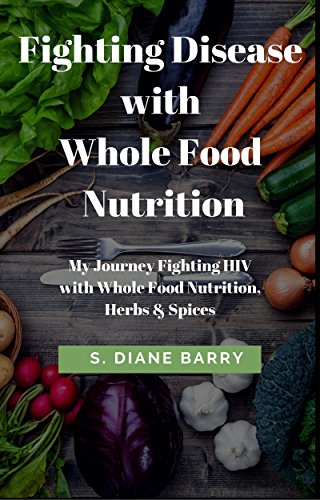
"Fighting Disease with Whole Food Nutrition" by S. Diane Barry

REVIEW and EXCERPT
Fighting Disease with Whole Food Nutrition
by S. Diane Barry

Fighting Disease with Whole Food Nutrition by S. Diane Barry

Fighting Disease with Whole Food Nutrition by S. Diane Barry is currently on tour with Bewitching Book Tours. The tour stops here today for an excerpt and my review. Please be sure to visit the other tour stops as well.


Description
I was diagnosed with HIV in January 2005.
Over twelve years later, I’m healthy and doing well.
I don’t have AIDS. My numbers are great.
I did this without prescription medications.
How?
By fighting HIV with whole food nutrition, herbs, spices, and healthy lifestyle choices.


Excerpt
There are many alternative therapies. I believe that food is the best medicine. Nothing outrageous but a healthy diet of fresh foods, full of nutrition, is a good start.
Herbs and spices offer medicinal qualities that science seeks to replicate and reproduce. I believe in Mother Nature and choose the most natural options I can afford. Many will argue about the cost of health foods, but I will argue about the cost of health care -a cost I do not have! I often have to remind myself I am HIV positive. I am undoubtedly healthier than most of the people I know. I take no prescription medications other than an occasional
muscle relaxer for neck pain. I even rely on a capsaicin or cayenne rub for topical use instead of taking a pill. I only use the medication as a last resort.
Prevention vs. cure is an excellent battle plan if you’re serious about living healthy.
There are many other things that may contribute to my body holding this virus at bay. I am not a cigarette smoker. I am a Vegetarian. I never was a clean freak, so I don’t use noxious chemicals to clean and pesticides are not my style.
[Want more? Click below to read a longer excerpt.]


My Review


By Lynda Dickson
The author wrote this book as a result of her experiences after being diagnosed with HIV. She describes herself as "a Whole Foods Enthusiast!" She was already an advocate of natural remedies before she contracted HIV, and she credits this with her success in combating the disease. As the author states, "This is about so much more than HIV. It’s about treating yourself like you want to be alive before you get a 'diagnosis'." In other words, "Prevention vs. cure is an excellent battle plan if you’re serious about living healthy." She believes that "food is the best medicine" but openly admits that "I can’t give any 'expert medical advice' only anecdotal observations and stories about what has worked for me." Some of her recommended treatments include coconut oil, basil oil, Himalayan rock salt, probiotics, fresh fruits and vegetables, herbs and spices, mushrooms, exercise, sweating. She also includes some (really) basic soup recipes.
While the author's intentions are noble, this book is poorly written, rambling, and repetitive. It contains numerous editing errors and is in need of some structure. The author makes sweeping statements with no evidence to back them up, and she includes a list of healthy foods to eat but doesn't tell us why. What she does do is reference some helpful books to read. She states, "I could wait a few more years to write this book, a few more months and proofread it over and over again, add more detail... but the other books you need are already out there." So my question is: why bother reading this book at all?


About the Author
It's 2017 and 12 years after my HIV diagnosis I am still healthy and on no prescription meds for HIV.
I wrote Fighting Disease with Whole Food Nutrition to start a discussion about healthy choices that save lives. Because no one seems to care about that. Not the doctors or specialists, or anyone I tried to contact to expand on why I am so healthy despite being HIV positive.
The answer is food. Real food. Not processed, microwaved, filled with preservatives and chemically created vitamins food. Real, whole, fresh food.
You are what you eat. Eat healthy to be healthy.

Links

Tuesday, September 17, 2013

"The Diet Dropout's Guide to Natural Weight Loss: Find Your Easiest Path to Naturally Thin" by Stan Spencer, PhD


The Diet Dropout's Guide to Natural Weight Loss: Find Your Easiest Path to Naturally Thin 
by Stan Spencer, PhD 


Description 
This book isn't about the latest celebrity diet, wonder food, or miracle supplement. It's about creating a personalized weight loss plan - your own easiest path to naturally thin. While you can lose weight with almost any diet, keeping the weight off is much more difficult, requiring permanent changes in eating and exercise habits. This book provides a science-based approach for making those changes in a way that works best for you, without wasting time, money, or effort.
Dr. Spencer explains why we gain weight and why the fat lost by dieting almost always comes back. He then presents an array of practical weight loss tools for controlling emotional eating, calming cravings, boosting metabolism, and improving nutrition and exercise. In the final chapter he has you create a natural weight loss plan based on your unique set of needs, abilities, and preferences. Simple recipes are provided for weight loss foods that reduce cravings and prolong satisfaction.
What this book offers is a solid approach to weight loss - self-directed, gradual, and lasting - in contrast to the quick but fleeting weight loss offered by most one-size-fits-all diet plans.

Excerpt 
If this were the early 1960s instead of the 2010s, you might not need a weight loss book. Most people were thin then.
Not now. Even with all the dieting we do, more than two thirds of US adults are now overweight, and the rate of obesity has almost tripled since 1960.
The extra weight isn’t natural, nor is it healthy. It not only affects our looks and physical abilities, it increases our risks of developing diabetes, heart disease, stroke, high blood pressure, gallbladder disease, osteoarthritis, sleep apnea, high cholesterol, complications of pregnancy, menstrual irregularities, and cancers of the uterus, breast, colon, and kidney.
So what is behind this weight gain epidemic?
A Less-Active Lifestyle
Our bodies are designed for manual labor and long-distance walking. Many of us, however, enjoy door-to-door motorized transportation to and from a desk job followed by hours of television or other passive entertainment. Such a lifestyle not only burns few calories but can also encourage us to eat more than we would if we were busy with physical activities.
The Fattening Food Environment
Before processed foods became the norm, our ancestors filled their dinner plates with minimally processed vegetables, fruits, and whole grains. Meats were unprocessed and lean. These natural foods, combined with an active lifestyle, promoted a slim, healthy body.
In contrast to the healthy foods enjoyed by our ancestors, the foods on our grocery store shelves today are often highly processed and have added fat and sugar. These processed foods are packed with calories and are so convenient and tempting that it’s easy to eat too much of them. As a result, the average adult today eats more calories than in past decades, with most of the extra calories coming from carbohydrate-rich foods such as sweets, soft drinks, potato products, pizza, bread, pasta, and white rice.
There are ten important aspects of our food environment that encourage us to eat too much.
Foods that Don’t Satisfy
Food processing produces calorie-heavy, low-nutrient, low-fiber foods that digest quickly. These foods leave us with loads of calories, soon-empty stomachs, and cravings for more.
Highly Palatable Foods
Highly palatable is a term used by scientists for foods that taste so good that we are tempted to eat them even when our stomachs are full. Most of these are processed foods high in fat, sugar, or refined flour. Such foods have become more abundant and affordable in recent decades, resulting in greater temptations to overeat. We often eat these foods for comfort or pleasure, not because we are hungry.
Highly palatable foods affect the parts of the brain that are responsible for drug addiction and cravings. The authors of a scientific study of the brain's response to highly palatable foods concluded that “overconsumption of palatable food triggers addiction-like responses in brain reward circuits and drives the development of compulsive eating.” In other words, junk food can be addictive.
Calorie-Heavy Foods
While the vegetables, fresh fruits, and whole grains our ancestors ate were high in nutrients and low in calories, the processed foods that fill our grocery store shelves are just the opposite — high in calories and low in nutrients. The result is that a typical meal of modern processed foods has more calories than we need and often too few nutrients. Calorie-heavy foods are believed to be a major factor in the weight gain epidemic.
Cheap, Convenient Food
There is inexpensive, ready-to-eat food almost everywhere we go. We have candy jars at work and cookie jars at home. We stock our refrigerators with soft drinks and our pantries with packaged snacks. Just seeing junk food can make us hungry, and food within easy reach is harder to resist than food that requires a little more effort to obtain. Eating too much has never been easier.
Large Portions
In the US, portion sizes of many foods have increased two- to five-fold since the 1970s.11 We tend to keep eating until the portion in front of us is gone, no matter what its size. Similarly, we tend to eat more when eating a snack food directly out of a large package (such as a bag of potato chips) than when served individual portions.
Passive Entertainment
Watching television or movies burns very few calories. It also encourages needless eating. If we eat during such entertainment, our distraction with the storyline can cause us to continue eating past the point at which we would normally be satisfied.
Convenient Substitutes for Water
Sports drinks, sugary soft drinks, fruit juices, and alcoholic drinks are readily available in our homes and elsewhere. These drinks quickly add calories without lasting satisfaction. Their consumption is believed to be a major factor in the weight gain epidemic.
Misleading Labels and Advertising
A picture of a slender athlete on a package of fresh fruit might make sense. The same picture on an “energy bar” consisting mostly of corn syrup and puffed rice does not. Advertisements often inaccurately depict the health benefits of the foods they are promoting.
Unhealthy Snack Foods
Common snack foods tend to be higher in calories and lower in nutrients than the kinds of foods usually eaten with meals. They are quick to add calories but slow to satisfy.
Restaurants
We eat out more now than in decades past. Restaurant food tends to be higher in calories and served in larger portions than food cooked at home. As a result, one restaurant meal might have enough calories for an entire day.
The Solution
Think of excess fat as a collection of bad habits. Lose the fat-promoting habits, and you will lose the excess fat. Each time you give up one of these bad habits (all other things being equal), you will lose fat until your body naturally settles at a lower weight. At that point you will need to give up another bad habit to lose more weight and keep it off.
Permanent weight loss requires permanent lifestyle changes. The information in this book will help you replace bad habits with good ones and make the lifestyle changes required for lasting weight loss. You will learn how small adjustments in your eating and exercise habits can result in a big difference in body fat over time, why many of the things you hear about gaining or losing weight are false, and why popular diets rarely produce permanent weight loss. You will also learn how to change your personal environment so it’s no longer fattening, boost your metabolism without drugs or supplements, give your body the exercise it needs without wasting time, eat fewer calories without counting them or going hungry, and beat temptation with the willpower you already have.
Often, the hardest part of forming new habits is just getting started. Watch for the QuickStart Tips as you read through the book. They will prompt you to pause and take solid steps down the path to your naturally thin potential.

Review
Being married to an amateur health guru who writes her own health blog, I have read countless articles, books, magazines and watched innumerable documentaries on the topic of health. In that span of time, I have learned about diets (and why they don't work), sleep, exercise and their effects on overall health. But it was not until I read this book that I found so many high-level concepts reduced to a simple language with specific tactics that make taking up a healthy lifestyle so practical, without being gimmicky in the least.
The beauty of this piece is that it deals with weight from every angle - cognitive, emotional and physical. So many works on the market deal with just one at a time, but Dr. Spencer's work provides a blueprint with tactics to manage all three at once to make simple yet effective and lasting change in the reader's life. It also comes in a book that can be read in an afternoon and the reader can start down their new path today.
The concepts Spencer addresses in the book need not only apply to those looking to manage their weight - they provide a foundation for anyone wanting to live a healthy lifestyle. I would recommend this book to anyone who has ever tried a diet and not gotten the results they were looking for, as well as anyone who is serious about leading a healthy life.

About the Author

Stan Spencer, PhD, was born in Mexico and grew up in Utah, USA. He is a biological consultant and former research scientist. Stan has conducted laboratory studies in biochemistry at Brigham Young University, in botany and evolution at Claremont Graduate University, and in genetics at the Smithsonian Institution. Stan lives in southern California his wife, Amy, and a varying number of their seven children. He blogs on natural weight loss techniques at Fat Loss Science.

Links

Thursday, January 17, 2013

The Diet Dropout's Guide to Natural Weight Loss: Find Your Easiest Path to Naturally Thin by Stan Spencer


NEW RELEASE and GIVEAWAY

The Diet Dropout's Guide to Natural Weight Loss: Find Your Easiest Path to Naturally Thin
by Stan Spencer, PhD


You're in for a treat. You have the chance of winning a paperback copy of this book. Enter the GIVEAWAY below for your chance to win. Thanks to Dr Stan Spencer for donating this awesome prize.


Description
This book isn't about the latest celebrity diet, wonder food, or miracle supplement. It's about creating a personalized weight loss plan - your own easiest path to naturally thin. While you can lose weight with almost any diet, keeping the weight off is much more difficult, requiring permanent changes in eating and exercise habits. This book provides a science-based approach for making those changes in a way that works best for you, without wasting time, money, or effort.
Dr. Spencer explains why we gain weight and why the fat lost by dieting almost always comes back. He then presents an array of practical weight loss tools for controlling emotional eating, calming cravings, boosting metabolism, and improving nutrition and exercise. In the final chapter he has you create a natural weight loss plan based on your unique set of needs, abilities, and preferences. Simple recipes are provided for weight loss foods that reduce cravings and prolong satisfaction.
What this book offers is a solid approach to weight loss - self-directed, gradual, and lasting - in contrast to the quick but fleeting weight loss offered by most one-size-fits-all diet plans.

Excerpt
If this were the early 1960s instead of the 2010s, you might not need a weight loss book. Most people were thin then.
Not now. Even with all the dieting we do, more than two thirds of US adults are now overweight, and the rate of obesity has almost tripled since 1960.
The extra weight isn’t natural, nor is it healthy. It not only affects our looks and physical abilities, it increases our risks of developing diabetes, heart disease, stroke, high blood pressure, gallbladder disease, osteoarthritis, sleep apnea, high cholesterol, complications of pregnancy, menstrual irregularities, and cancers of the uterus, breast, colon, and kidney.
So what is behind this weight gain epidemic?
A Less-Active Lifestyle
Our bodies are designed for manual labor and long-distance walking. Many of us, however, enjoy door-to-door motorized transportation to and from a desk job followed by hours of television or other passive entertainment. Such a lifestyle not only burns few calories but can also encourage us to eat more than we would if we were busy with physical activities.
The Fattening Food Environment
Before processed foods became the norm, our ancestors filled their dinner plates with minimally processed vegetables, fruits, and whole grains. Meats were unprocessed and lean. These natural foods, combined with an active lifestyle, promoted a slim, healthy body.
In contrast to the healthy foods enjoyed by our ancestors, the foods on our grocery store shelves today are often highly processed and have added fat and sugar. These processed foods are packed with calories and are so convenient and tempting that it’s easy to eat too much of them. As a result, the average adult today eats more calories than in past decades, with most of the extra calories coming from carbohydrate-rich foods such as sweets, soft drinks, potato products, pizza, bread, pasta, and white rice.
There are ten important aspects of our food environment that encourage us to eat too much.
Foods that Don’t Satisfy
Food processing produces calorie-heavy, low-nutrient, low-fiber foods that digest quickly. These foods leave us with loads of calories, soon-empty stomachs, and cravings for more.
Highly Palatable Foods
Highly palatable is a term used by scientists for foods that taste so good that we are tempted to eat them even when our stomachs are full. Most of these are processed foods high in fat, sugar, or refined flour. Such foods have become more abundant and affordable in recent decades, resulting in greater temptations to overeat. We often eat these foods for comfort or pleasure, not because we are hungry.
Highly palatable foods affect the parts of the brain that are responsible for drug addiction and cravings. The authors of a scientific study of the brain's response to highly palatable foods concluded that “overconsumption of palatable food triggers addiction-like responses in brain reward circuits and drives the development of compulsive eating.” In other words, junk food can be addictive.
Calorie-Heavy Foods
While the vegetables, fresh fruits, and whole grains our ancestors ate were high in nutrients and low in calories, the processed foods that fill our grocery store shelves are just the opposite — high in calories and low in nutrients. The result is that a typical meal of modern processed foods has more calories than we need and often too few nutrients. Calorie-heavy foods are believed to be a major factor in the weight gain epidemic.
Cheap, Convenient Food
There is inexpensive, ready-to-eat food almost everywhere we go. We have candy jars at work and cookie jars at home. We stock our refrigerators with soft drinks and our pantries with packaged snacks. Just seeing junk food can make us hungry, and food within easy reach is harder to resist than food that requires a little more effort to obtain. Eating too much has never been easier.
Large Portions
In the US, portion sizes of many foods have increased two- to five-fold since the 1970s.11 We tend to keep eating until the portion in front of us is gone, no matter what its size. Similarly, we tend to eat more when eating a snack food directly out of a large package (such as a bag of potato chips) than when served individual portions.
Passive Entertainment
Watching television or movies burns very few calories. It also encourages needless eating. If we eat during such entertainment, our distraction with the storyline can cause us to continue eating past the point at which we would normally be satisfied.
Convenient Substitutes for Water
Sports drinks, sugary soft drinks, fruit juices, and alcoholic drinks are readily available in our homes and elsewhere. These drinks quickly add calories without lasting satisfaction. Their consumption is believed to be a major factor in the weight gain epidemic.
Misleading Labels and Advertising
A picture of a slender athlete on a package of fresh fruit might make sense. The same picture on an “energy bar” consisting mostly of corn syrup and puffed rice does not. Advertisements often inaccurately depict the health benefits of the foods they are promoting.
Unhealthy Snack Foods
Common snack foods tend to be higher in calories and lower in nutrients than the kinds of foods usually eaten with meals. They are quick to add calories but slow to satisfy.
Restaurants
We eat out more now than in decades past. Restaurant food tends to be higher in calories and served in larger portions than food cooked at home. As a result, one restaurant meal might have enough calories for an entire day.
The Solution
Think of excess fat as a collection of bad habits. Lose the fat-promoting habits, and you will lose the excess fat. Each time you give up one of these bad habits (all other things being equal), you will lose fat until your body naturally settles at a lower weight. At that point you will need to give up another bad habit to lose more weight and keep it off.
Permanent weight loss requires permanent lifestyle changes. The information in this book will help you replace bad habits with good ones and make the lifestyle changes required for lasting weight loss. You will learn how small adjustments in your eating and exercise habits can result in a big difference in body fat over time, why many of the things you hear about gaining or losing weight are false, and why popular diets rarely produce permanent weight loss. You will also learn how to change your personal environment so it’s no longer fattening, boost your metabolism without drugs or supplements, give your body the exercise it needs without wasting time, eat fewer calories without counting them or going hungry, and beat temptation with the willpower you already have.
Often, the hardest part of forming new habits is just getting started. Watch for the QuickStart Tips as you read through the book. They will prompt you to pause and take solid steps down the path to your naturally thin potential.

Review
Being married to an amateur health guru who writes her own health blog, I have read countless articles, books, magazines and watched innumerable documentaries on the topic of health. In that span of time, I have learned about diets (and why they don't work), sleep, exercise and their effects on overall health. But it was not until I read this book that I found so many high-level concepts reduced to a simple language with specific tactics that make taking up a healthy lifestyle so practical, without being gimmicky in the least.
The beauty of this piece is that it deals with weight from every angle - cognitive, emotional and physical. So many works on the market deal with just one at a time, but Dr. Spencer's work provides a blueprint with tactics to manage all three at once to make simple yet effective and lasting change in the reader's life. It also comes in a book that can be read in an afternoon and the reader can start down their new path today.
The concepts Spencer addresses in the book need not only apply to those looking to manage their weight - they provide a foundation for anyone wanting to live a healthy lifestyle. I would recommend this book to anyone who has ever tried a diet and not gotten the results they were looking for, as well as anyone who is serious about leading a healthy life.

About the Author

Stan Spencer, PhD, was born in Mexico and grew up in Utah, USA. He is a biological consultant and former research scientist. Stan has conducted laboratory studies in biochemistry at Brigham Young University, in botany and evolution at Claremont Graduate University, and in genetics at the Smithsonian Institution. Stan lives in southern California his wife, Amy, and a varying number of their seven children. He blogs on natural weight loss techniques at Fat Loss Science.

Giveaway

a Rafflecopter giveaway


Links