Showing posts with label Providence Book Promotions. Show all posts

Friday, November 22, 2019

"Bread Bags and Bullies" by Steven Manchester


EXCERPT and GIVEAWAY
Bread Bags and Bullies:
Surviving the ’80s
by Steven Manchester

Bread Bags and Bullies: Surviving the ’80s by Steven Manchester

Bread Bags and Bullies by Steven Manchester is currently on tour with Providence Book Promotions. The tour stops here today for an excerpt and a giveaway. Please be sure to visit the other tour stops as well.


For more books by this author, please check out my blog post on Ashes and my blog post on Three Shoeboxes.

Description
It’s the winter of 1984. Twelve-year-old Herbie and his two brothers - Wally and Cockroach - are enjoying the mayhem of winter break when a late Nor’easter blows through New England, trapping their quirky family in the house. The power goes out and playing Space Invaders to AC DC’s Back in Black album is suddenly silenced - forcing them to use their twisted imaginations in beating back the boredom. At a time when the brothers must overcome one fear after the next, they learn that courage is the one character trait that guarantees all others. This hysterical coming-of-age tale is jam-packed with enough nostalgia to satisfy anyone who grew up in the ’80s or at least had the good fortune to travel through them.

Book Video


Excerpt
It was the afternoon of Friday 13th, the last day before February vacation. A whole week off from stupid middle school, I thought, excitedly.
From the moment I stepped onto the bus, the atmosphere felt electric, everyone happy for the much-needed winter break.
Many of the bus’s green fake leather bench seats were split and duct-taped. As I made my way down the narrow aisle in search of a seat, I heard the usual remarks offered to most eighth graders from the high school kids who’d already claimed their territory.
“You can’t sit here, dufus.”
“This seat’s taken.”
Even on such a joyous afternoon, I was quickly reminded that riding the bus was a hard kick in the teeth. It didn’t matter whether they were wearing black leather vests and chain wallets or Swatch watches and turned-up collars on their pastel IZOD Polo shirts, the high school kids were just plain mean.
As I made my way further down the line, the objections got even stronger.
“Oh, I don’t think so, dweeb.”
“If you even think about sitting, you dink, I’ll beat you to a pulp.”
Eat shit and die, I replied in my head, but never out loud.
I hated sitting with the nerds or the kids that smelled like spoiled lunchmeat, but after receiving enough rejections I began to wonder, Maybe the older kids see me the same way?
Although school had its social order, this mobile environment was even less forgiving. At a time in life when the mind is impressionable—constantly worrying about what others think of you, even about what you think of yourself—the bus’s sadistic hierarchy created scar tissue that would help to define many lives for years to come. It was a cruel testing ground for survival, where the tougher or more popular kids claimed the back of the bus. Those coveted seats were sacred territory that most of us spent years aspiring to. On the big, yellow school bus, physical threats were the least of our worries. This is psychological warfare, I realized early on.
Besides having to deal with the pecking order, there was incredible peer pressure to do things most of us would have never dreamed of doing—like distracting the elderly driver, Mr. Gifford. Given that the bus had no seat belts, this daily practice seemed pretty insane to me. I’d never actually seen Mr. Gifford’s eyes; the two narrow slits were usually squinting into the rear-view mirror. “Sit down!” he constantly yelled.
There was always the smell of smoke wafting from the back, though I was never really sure it was cigarette smoke. Usually, there were two kids making out—a boy and girl—and it wasn’t always the same couple. The bus had its own sub-culture, a microcosm of the twisted society we were growing up in.
It’s amazing Old Man Gifford can keep this giant bus on the road and not in one of the ditches we pass on our way home, I thought.
As I claimed my seat beside another outcast Junior High-Schooler, I spotted my brother, Wally, sitting toward the middle of the vessel. Wally had straight brown hair, serious brown eyes and the chunky Bloomfield nose. He looked like my father. Unfortunately, a terrible case of acne was in full bloom, taking away from his rugged handsome looks. Our eyes locked. I nodded toward him. Although he returned the gesture, he was much more subtle in his action. You’re such a butthead, I thought.
A cold breeze tapped me on the shoulder. It’s freezing in here, I realized, turning around to see that the windows were open in the back of the yellow torture chamber. As I turned, I caught a whiff of my bus mate. And thank God they’re open, I thought, trying to place the unusual smell. Fried Spam? I guessed, before noticing that the stinky kid was wearing a Smokey the Bear sweatshirt that read, Only You Can Prevent Forest Fires. I had to do a double-take. No way, I thought in disbelief, it looks like Mr. Potato Head, here, has a death wish…wearing a lame pullover like that. I’m surprised he doesn’t have a Just Say No campaign button pinned to the front of it. I chuckled aloud, drawing a look from my new best friend. I pity the fool, I thought, quoting Mr. T.—one of my favorite TV personalities—in my head.
I’d just popped my last Luden’s cherry cough drop into my mouth when I heard it. There was a commotion behind us, much louder than the usual raucous. What the hell? No sooner did I turn in my seat to investigate the ruckus when my heart plummeted past my stone-washed jeans straight into my worn Chuck Taylor high tops.
Owen Audet—the most feared enforcer on Bus 6—was standing toe-to-toe with Wally. He was more than a head taller than my poor brother. Oh no, I thought, Wally’s gotta be shittin’ bricks right now. I swallowed hard. I know I would be. Owen was big, dumb and mean—and heavy on the mean.
“I need to borrow another book,” the Missing Link barked, looming over my brother.
There were a few laughs from the bully’s brain-dead minions.
My mouth instantly went dry, while my heart began to race. Although my brother was on the “big-boned” side, built like a Sherman tank, he still looked so small next to Owen. That dude’s a Clydesdale, I thought, and Wally’s road pizza.
“Sor…sorry, but I can’t do it,” Wally refused, his voice three octaves higher than normal. Even though he sounded like a yipping dog, he somehow stood his ground.
Owen’s face turned beet red. He obviously didn’t appreciate being challenged in front of the crowd.
It’s Friday the 13th, I remembered, and Jason’s back.
Owen grabbed for Wally’s backpack, who pulled away violently.
“Ooooh,” the crowd groaned.
“You must be out of your damn mind, loser,” the aggressor hissed.
“I…I would be if…” Wally stuttered, looking like a terrified Kindergartner, “…if I let you take another book.”
I didn’t blame him. After the way Pop reacted the last time this same nightmare happened, I thought, Wally has no choice.
[Want more? Click below to read a longer excerpt.]


Praise for the Book
“If you loved the ever popular A Christmas Story, be prepared for another classic. Bread Bags & Bullies is a must read! Funny, poignant, and heartwarming - Steven Manchester is a master storyteller.” ~ Jamie Farr, Actor, M.A.S.H.
Bread Bags & Bullies is a detailed eye-opening experience of the Big Hair decade. Enjoyable whether you were there or not - or just can’t quite remember it.” ~ Barry Williams, Actor, The Brady Bunch
“Steven Manchester’s Bread Bags & Bullies captures a simpler time, just before technology began dominating America’s time and attention. This nostalgic story is hilarious, told by a family of characters you won’t soon forget. A must read!” ~ Ed Asner, Actor, Lou Grant
“Steve Manchester’s Bread Bags & Bullies is a fantastic blast from the past, evoking all the fun and nostalgia of the ‘80s - even my big hair!” – Audrey Landers, Actress, Dallas
“An extraordinary recall of 1980s pop cultural, Bread Bags & Bullies will make you laugh out loud as you revisit the pains and pleasures of growing up. The book made me want to pick up the phone, call my brother in Nebraska and reminisce about our own snow day adventures.” ~ Douglas Barr, Actor, The Fall Guy


About the Author
Steven Manchester
Steven Manchester is the author of the #1 bestsellers Twelve Months, The Rockin’ Chair, Pressed Pennies, and Gooseberry Island; the national bestsellers, Ashes, The Changing Season, and Three Shoeboxes; and the multi-award-winning novels, Goodnight, Brian and The Thursday Night Club. His work has appeared on NBC’s Today Show, CBS’s The Early Show, CNN’s American Morning, and BET’s Nightly News. Three of Steven’s short stories were selected “101 Best” for Chicken Soup for the Soul series. He is a multi-produced playwright, as well as the winner of the 2017 Los Angeles Book Festival and the 2018 New York Book Festival. When not spending time with his beautiful wife, Paula, or their four children, this Massachusetts author is promoting his works or writing.

Giveaway
Enter the tour-wide giveaway for a chance to win one of two $15 Amazon gift cards or one of five ebook copies of Bread Bags and Bullies by Steven Manchester.

Links

Featured in this post:


Tuesday, August 13, 2019

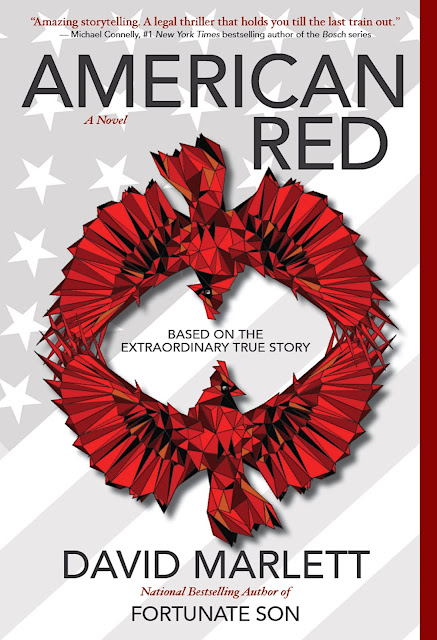
"American Red" by David Marlett


EXCERPT
American Red
by David Marlett

American Red by David Marlett

American Red by David Marlett is currently on tour with Providence Book Promotions. The tour stops here today for an excerpt. Please be sure to visit the other tour stops as well.


Description
In American Red, as the Great American Century begins, and the modern world roars to life, Capitalists flaunt greed and seize power, Socialists and labor unions flex their violent will, and an extraordinary true story of love and sacrifice unfolds.
In his critically acclaimed debut novel, Fortunate Son, David Marlett introduced readers to a fresh take on historical fiction – the historical legal thriller – bringing alive the people and events leading to and surrounding some of the most momentous, dramatic legal trials in history. Now he returns with American Red, the story of one of the greatest domestic terrorists in American history, and the detectives, lawyers, spies, and lovers who brought him down.
The men and women of American Red are among the most fascinating in American history. When, at the dawn of the 20th century, the Idaho governor is assassinated, blame falls on “Big Bill” Haywood, the all-powerful, one-eyed boss of the Western Federation of Miners in Denver. Close by, his polio-crippled wife, Neva, struggles with her wavering faith, her love for another man, and her sister’s affair with her husband. New technologies accelerate American life, but justice lags behind. Private detectives, battling socialists and unions on behalf of wealthy capitalists, will do whatever it takes to see Haywood hanged. The scene is set for bloodshed, from Denver to Boise to San Francisco. America’s most famous attorney, Clarence Darrow, leads the defense - a philandering U.S. senator leads the prosecution - while the press, gunhands, and spies pour in. Among them are two idealists, Jack Garrett and Carla Capone - he a spy for the prosecution, she for the defense. Risking all, they discover truths about their employers, about themselves and each other, and what they’ll sacrifice for justice and honor - and for love.


Excerpt
The lawyer lobbed a verbal spear across the courtroom, piercing the young man, pinning him to the creaky witness chair and tilting the twelve jurymen forward. Their brows rose in anticipation of a gore-laden response from the witness as he clutched his bowler, his face vacant toward the wood floor beyond his shoddy boots. When the judge cleared his throat, the plaintiff ’s attorney, Clarence Darrow, repeated the question. “Mr. Bullock, I know this is a strain upon you to recount that tragic day when fifteen of your brothers perished at the hands of the Stratton—”
“Your Honor! Point in question,” barked the flint-faced defense attorney representing the Stratton Independence Mine, a non-union gold operation near Cripple Creek, Colorado. On this warm summer afternoon in Denver, he and Darrow were the best dressed there, each wearing a three-button, vested suit over a white shirt and dull tie.
The robed judge gave a long blink, then peered at Darrow. With a chin waggle, his ruling on the objection was clear.
“Yes, certainly. My apologies, Your Honor,” feigned Darrow, glancing toward the plaintiff ’s table where two widows sat in somber regard. Though his wheat-blonde hair and sharp, pale eyes defied his age of forty-nine, his reputation for cunning brilliance and oratory sorcery mitigated the power of his youthful appearance: it was no longer the disarming weapon it had once been. No attorney in the United States would ever presume nascence upon Clarence Darrow. Certainly not in this, his twenty-sixth trial. He continued at the witness. “Though as just a mere man, one among all …” He turned to the jury. “The emotion of this event strains even the most resolute of procedural decorum. I am, as are we all, hard-pressed to—”
“Whole strides, shall we, Mr. Darrow?” grumbled the judge.
“Yes,” Darrow said, turning once again to James Bullock who seemed locked in the block ice of tragedy, having not moved a fraction since first taking the witness seat. “Mr. Bullock, we must rally ourselves, muster our strength, and for the memory of your brothers, share with these jurymen the events of that dark day. You said the ride up from the stope, the mine floor, was a swift one, and there were the sixteen of you in the cage made to hold no more than nine—is that correct?”
“Yes, Sir,” Bullock replied, his voice a faint warble.
“Please continue,” Darrow urged.
Bullock looked up. “We kept going, right along, but it kept slipping. We’d go a ways and slip again.”
“Slipping? It was dropping?”
“Yes, Sir. Dropping down sudden like, then stopping. Cappy was yelling at us to get to the center, but there was no room. We was in tight.”
“By Cappy you mean Mr. Capone, the foreman?”
“Yes, Sir. Our shift boss that day.” The witness sucked his bottom lip. “He was in the cage ’long with us.” He sniffed in a breath then added, “And his boy, Tony. Friend of mine. No better fella.”
“My condolences,” said Darrow. “What do you think was the aid in getting the men to the middle of the cage?”
“Keep it centered in the shaft, I reckon. We was all yelling.” Bullock took a slow breath before continuing, “Cappy was trying to keep the men quiet, but it wasn’t making much a difference. Had his arms around Tony.”
A muscle in Darrow’s cheek shuddered. “Please continue.”
“So we was slipping, going up. Then the operator, he took us up about six feet above the collar of the shaft, then back down again.”
“Which is not the usual—”
“Not rightly. No, Sir. We should’ve stopped at the collar and no more. But later they said the brakes failed on the control wheel.”
“Mr. Bullock, let’s return to what you experienced. You were near the top of the shaft, the vertical shaft that we’ve established was 1,631 feet deep, containing, at that time, about twenty feet of water in its base, below the lowest stope, correct?”
“Yes, Sir. Before they pumped that water to get to em.”
“By ‘them’ you mean the bodies of your dead companions?”
“Yes, Sir.”
“Ok, you were being hoisted at over 900 feet per minute by an operator working alone on the surface—near the top of the shaft, when the platform began to slip and jump. Is that your testimony?”
“Yes, Sir.”
“That must have been terrifying.”
“Yes, Sir, it was. We’d come off a tenner too.”
“A ten-hour shift?”
“Yes, Sir.”
Darrow rounded on the jury, throwing the next question over his shoulder. “Oh, but Sir, how could it have been a ten-hour work day when the eight-hour day is now the law of this state?”
The defense lawyer’s chair squeaked as he stood. “Objection, Your Honor.”
“I’ll allow it,” barked the judge, adding, “But gentlemen …”
The witness shook his head. “The Stratton is a non-union, gold ore mine. Supposed to be non-union anyway. Superintendent said owners weren’t obliged to that socialist law.”
“Hearsay, Your—”
“Keep your seat, Counsel. You’re going to wear this jury thin.” Darrow stepped closer to the witness.
“Mr. Bullock, as I said, let’s steer clear from what you heard others say. The facts speak for themselves: you and your friends were compelled to work an illegal ten-hour shift. Let’s continue. You were near the top, but unable to get off the contraption, and it began to—”
“Yes. We’d gone shooting up, then he stopped it for a second.”
“By ‘he,’ you mean the lift operator?”
“Yes, Sir. He stopped it but then it must have gotten beyond his control, cause we dropped sixty, seventy feet all the sudden. We were going quick. We said to each other we’re all gone. Then he raised us about ten feet and stopped us. But then, it started again, and this time it was going fast up and we went into the sheave wheel as fast as we could go.”
“To be sure we all follow, Mr. Bullock, the lift is the sole apparatus that hoisted you from the Stratton Mine, where you work?”
“Yes, Sir.”
“And the sheave wheel is the giant wheel above the surface, driven by a large, thirty-year-old steam engine, run by an operator. That sheave wheel coils in the cable”—he pantomimed the motion—“pulling up the 1,500-pound-load platform, or lift, carrying its limit of nine men. And it coils out the cable when the lift is lowered. But that day the lift carried sixteen men—you and fifteen others. Probably over 3,000 pounds. Twice its load limit. Correct?”
“Yes, Sir. But, to be clear, I ain’t at the Stratton no more.”
“No?” asked Darrow, pleased the man had bit the lure.
“No. Seeing how I was one of Cappy’s men. Federation. And, now ’cause this.” His voice faded.
Darrow frowned, walked a few paces toward the jury, clapped once and rubbed his hands together. “The mine owners, a thousand miles away, won’t let you work because you’re here—a member of the Western Federation of Miners, a union man giving his honest testimony. Is that right?”
“Yes, Sir.”
Again, the defense counsel came to his feet. “Your Honor, Mr. Darrow knows Mr. Bullock’s discharge wasn’t—”
The judge raised a hand, took a deep breath and cocked his head toward the seasoned attorney before him. “Swift to your point, Mr. Darrow.”
“Yes, Your Honor.” Darrow’s blue eyes returned to the witness. “Mr. Bullock, you were telling us about the sheave wheel.”
“Yes. It’s a big thing up there, out over the top of the shaft. You see it on your way up. We all think on it—if we was to not stop and slam right up into it—which we did that day. We all knew it’d happen. I crouched to save myself from the hard blow I knew was coming. I seen a piece of timber about one foot wide there underside the sheave, and soon as we rammed, I grabbed hold and held myself up there, and pretty soon the cage dropped from below me, and I began to holler for a ladder to get down.”
“Must have been distressing, up there, holding fast to a timber, dangling 1,631 feet over an open shaft, watching your fifteen brothers fall.”
Bullock choked back tears. “Yes, Sir. That’s what I saw.” He paused. When he resumed, his tone was empty, as if the voice of his shadow. “I heard em. Heard em go. They was screaming. They knew their end had come. I heard em till I heard em no more.”
[Want more? Click below to read a longer excerpt.]


Praise for the Book
“Amazing storytelling. A legal thriller that holds you till the last train out.” ~ Michael Connelly, #1 New York Times bestselling author of the Bosch series
 “A cracking good tale! Part love story, part espionage thriller.” ~ Jacquelyn Mitchard, New York Times bestselling author of The Deep End of the Ocean
“Vivid, well researched and told bare-knuckled across a tapestry that is both broad and nuanced ... with characters who are outsized and real.” ~ Mark Sullivan, international bestselling author of Beneath a Scarlet Sky
“A gripping story … unforgettable characters … fascinating.” ~ Adam Benforado, New York Times bestselling author
“A stellar novel of intrigue, adventure, engaging characters, and a fascinating backdrop. A true gem of a story.” ~ Steve Berry, multiple New York Times bestselling author
“An important story of intensity and emotional pull. Be prepared to be captured by this gifted storyteller.” ~ Jeff Kamen, Emmy-winning NPR and NBC journalist and author


About the Author
David Marlett
David Marlett is an award-winning storyteller and writer of historical fiction, primarily historical legal thrillers bringing alive the fascinating people and events leading to major historical trials. His first such novel, Fortunate Son, became a national bestseller in 2014, rising to #2 in all historical fiction and #3 in all literature and fiction on Amazon. The late Vincent Bugliosi - #1 New York Times bestselling author of Helter Skelter - said David is “a masterful writer of historical fact and detail, of adventure, peril and courtroom drama.” Just released is American Red which follows the extraordinary true story of a set of radical lovers, lawyers, killers, and spies who launched the Great American Century.
He is currently writing his next historical legal thriller, Angeles Los, which continues some of the lead characters from American Red. Angeles Los is based on the true story at the 1910 intersection of the first movies made in Los Angeles, the murderous bombing of the Los Angeles Times, and eccentric Abbot Kinney’s “Venice of America” kingdom. In addition, David is a professor at Pepperdine Law School, was the managing editor of OMNI Magazine, and guest-lectures on story design. He is a graduate of The University of Texas School of Law, the father of four, and lives in Manhattan Beach, California.

Links

Featured in this post:


Friday, September 21, 2018

"The Last Weekend of the Summer" by Peter Murphy

REVIEW and GIVEAWAY
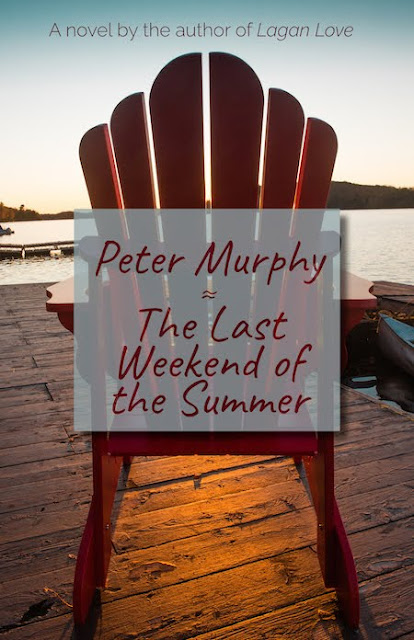
The Last Weekend of the Summer
by Peter Murphy

The Last Weekend of the Summer by Peter Murphy

The Last Weekend of the Summer by Peter Murphy is currently on tour with Providence Book Promotions. The tour stops here today for my review, an excerpt, and a giveaway. Please be sure to visit the other tour stops as well.


Description
They have been coming to their grandmother Gloria’s lake cottage since they were babies. Now Johnnie and Buddy have families of their own and C.C. has a life full of adult drama and adventure. And this trip – the only stated purpose of which is to bring the family together for the last weekend of the summer – seems full of portent. Gloria has been hinting that there’s more on the agenda than grilling and swimming, and when the three siblings learn that their estranged father will also be in attendance, it becomes clear that this weekend will have implications that last far beyond the final days of the season.
A touching, incisive view into the dynamics of a family on the verge of change and filled with characters both distinctive and utterly relatable, The Last Weekend of the Summer is a rich, lyrical reading experience that will resonate in your heart.

Excerpt
As the truck slithered to a halt on the gravel road, Susie and Joey took off. It was one of their cottage rituals, running to Gloria who stood waving from the veranda. For the last few years, Joey had let Susie win but had always made it look like he was running as fast as he could. Johnnie and Carol sat back and watched. They always gave the kids a few moments with Gloria before they joined them.
“So, what’s really going on?” Carol asked without looking over at him.
“What do you mean?”
“There’s a little dark cloud hovering over your head.”
“Damn. I was hoping you wouldn’t notice it.”
“Come on, out with it.”
“Dad’s coming too. He’s coming sometime Saturday morning.”
“Does your mother know?”
“I don’t think so. Gloria wanted to break the news to everyone at the same time.”
“Oh dear, so Buddy doesn’t know yet?”
“No, and there’s more.”
There always was with his family, but Carol didn’t say that. Instead, she just sat for a moment taking it all in. And when he was finished, she squeezed his hand and leaned across to kiss his cheek. “I’m so sorry to hear that. Are you going to be okay?”
“Don’t worry about me; I’ll be fine. And we’re all going to have a great time, no matter what.” He smiled and winked at her. “Ready?”
“Showtime,” she smiled back, and she got out and walked towards the veranda. She knew what he was doing; he was getting himself ready for another weekend of enabling his sisters and his mother. She wished he wouldn’t, but there was no point in saying that. Instead, she’d be as loving and supportive as he needed her to be. It was how they dealt with life—along with having a laugh at themselves. “And stop checking out my ass,” she called over her shoulder as she went.
“Better yours than someone else’s,” Gloria laughed as she slowly descended the stairs from the veranda and kissed Carol’s cheek. She still had the most remarkable hearing. “That was something my Harry always used to say.”
“Really, Gloria, I wouldn’t have thought stuff like that would have been a problem for you guys.”
“He was blind, Carol, but he was still a man.”
Carol pretended to look shocked, but Gloria carried on as if she didn’t notice. “But you have nothing to worry about. Johnnie’s still madly in love with you, isn’t he, dear?” Gloria had a twinkle in her eye.
“Of course he is. And I’m still crazy about him—just don’t tell him.”
“I hope so, dear, because I put you two in the east room. I know it’s your favorite.”
“Thanks,” Carol took the old, brittle woman into her arms. “And are you okay, Gloria?”
“Of course I am. Why would you ask such a thing?” But she stayed in Carol’s arms for a little while longer.
“What are you two plotting?” Johnnie asked as he struggled up with their bags. “And don’t worry about me—I’ll just lug everybody’s stuff by myself.”
“And, well, you should,” Gloria reached up and kissed him, and hugged him as tight as her frail old arms would allow. “Your poor wife and children are here for a rest, so don’t be selfish and go around spoiling everything.
“So,” Gloria asked after Carol had gone to settle the kids into the new rooms over the boathouse. “Have you talked with your father?” She waited at the bottom step for Johnnie to take her by the elbow. She could have made it on her own, but she knew he liked to behave like a gentleman.
“Yes, and I hope he knows what he’s doing. It might be asking a bit too much.”
“Not of you, dear, surely?”
“No, I’m okay with it all, and I really want this to work out—for everyone. I was a bit torn up when I first heard, but it’s settled in now and, well, you know . . .”
“Yes, Johnnie, I do.” She smiled up at him and reached up to stroke his cheek. It always reminded her of Harry’s—at least his good side. “Being family means having to go through things like this, and we will all get to play our parts. Hopefully C.C.’s new love interest will provide enough distraction for your mother.”
She paused when they got to the top step and looked up at him for a moment as if she was about to say something else but changed her mind.
“What is it, Gloria? What other secrets are you keeping from me?”
“Far too many for what little time we have left. Now let’s go inside. I have some nice cold beer in the fridge. You might need some fortification before your mother gets here.”
[Want more? Click below to read a longer excerpt.]


Praise for the Book
“Great story, love the ending, a surprise! Love that this book covers all age groups and their realistic daily problems.” ~ Jbarr5
“This is a well written story about a dysfunctional family with many secrets. […] There are many issues in this novel that a reading group could discuss and questions are included for that purpose. The story is plotted well and there is much for readers to think about at the end. Murphy's writing style is good.” ~ Joan N.
“Full of emotions, various personalities, it includes all age-groups making this a realistic family story. An ode to Summer, well-written read.” ~ SOMDReigel
“A story of hurt, anger, love and reconciliation among those we know best - Family. Well done!” ~ Laurie
“This wonderfully written book takes us on a journey of family drama, family love and family loss. Peter Murphys characters are well developed, diverse and engaging. The Last Weekend of the Summer is a great summer beach read.” ~ Donna M. Clerico

My Review
I received this book in return for an honest review.


By Lynda Dickson
On this last weekend of summer, matriarch Gloria brings her whole family together, even a surprise guest. She says, “Perhaps it is a little selfish of me, but I wanted you all here with me this weekend. I wanted my entire family to be together once more, while there is still time.” Of course, they all think she must be dying, but the truth is even harder to take. It will be a difficult weekend because “when they were all together - it was like they stopped being who they really were and all became characters in some drawn-out soap opera.” Long-held resentments will surface, relationships will be tested, and old family secrets will be revealed.
The story is told in the third person point-of-view of every family member, bar the two youngest boys. It’s hard to keep up with whose head you’re in, and even the author must have had trouble keeping up because sometimes two points-of-view are included in the same section. The dialogue is often lacking in contractions, making it stilted and unnatural and pulling the reader out of the story. Nevertheless, the author explores a rich tapestry of relationships in this family where everyone initially appears unlikable but ends up revealing their redeeming features. This is just the kind of family drama I’ve been missing and craving.
The story is followed by “Reading Group Questions” and “A Conversation with the Author”.
Warnings: coarse language, drug use, sexual references, LGBTQ themes, suicide references.

Some of My Favorite Lines
“… when you sit back and take it all in, life is neutral. It’s up to us to look at it from whatever side we like.”
“Mary and Gloria were sitting at opposite ends of the table, as silent as bookends, each deep within their own thoughts.”
“You have the very rare gift of being able to compliment and insult at the same time.”
“You have always been a pain in the ass, and that alone makes you one of us.”
“… it is so easy to rationalize our own mistakes and just as easy to make too big a deal of the mistakes of others.”
“… that sounds far too much like self-pity. It may seem warm and comforting at first, but I have found that it is not unlike peeing in your pants. It is, ultimately, embarrassing.”
“If there is a lesson we can offer, then it should be that when you are in doubt, stop and think about how your mother or I might deal with it and do the opposite.”
“A mother’s role is really very simple. You just have to make everyone happy all the time.”
“… all families are just petri dishes for growing all kind of craziness. Yours is just that bit extra special crazy.”

About the Author
Peter Murphy
Peter Murphy was born in Killarney where he spent his first three years before his family had to move to Dublin. Growing up in the verdant braes of Templeogue, Peter was schooled by the De La Salle brothers in Churchtown where he played rugby for “The Wine and Gold.” He also played football (soccer) in secret! After that, he graduated and studied the Humanities in Grogan’s under the guidance of Scot’s corner and the bar staff, Paddy, Tommy, and Sean. Murphy financed his education by working summers on the building sites of London. He also tramped the roads of Europe playing music and living without a care in the world.
But his move to Canada changed all of that. He only came over for a while and ended up living there for more than thirty years. He took a day job and played music in the bars at night until the demands of family life intervened. Having raised his children and packed them off to university, Murphy answered the long-ignored internal voice and began to write. He has published five novels so far and has begun work on a new one. Nowadays, he lives in beautiful Lisbon with his wife Eduarda and their well-read dog, Baxter.

Giveaway
Enter the tour-wide giveaway for a chance to win one of five ebook copies of Lagan Love by Peter Murphy.

Lagan Love by Peter Murphy

Links